Choosing China’s top Pegboard Displays manufacturers and suppliers requires more than comparing attractive catalogs. Buyers must examine material quality, production experience, customization ability, inspection procedures, and export reliability. A strong supplier should provide clear drawings, load-bearing information, surface-finish samples, packaging details, and realistic delivery schedules. Small details matter. A loose hook can damage a product display. A weak board can create safety concerns in a busy store.
Martin M. Pegler, a respected visual merchandising author and display specialist, wrote, “Visual merchandising is the art of displaying merchandise in a way that makes the customer want to buy.” His principle remains relevant to modern Pegboard Displays. The right system turns a blank retail wall into an organized selling area, with adjustable hooks, shelves, baskets, and signage placed within easy customer reach. It should support both presentation and daily replenishment.
However, identifying the “top” supplier is not always straightforward. Factory size can impress, but it does not guarantee consistent quality. A smaller manufacturer may offer better communication and more flexible customization. That possibility deserves attention. Buyers should request samples, verify production photos, check surface durability, and discuss replacement parts before placing large orders. Certifications and documented quality controls also strengthen supplier credibility, although paperwork alone is insufficient. Real performance matters more. This guide reviews leading Chinese manufacturers and suppliers through practical criteria, including product design, manufacturing capability, customization, quality assurance, pricing transparency, and after-sales support. Some comparisons may remain imperfect, because supplier data and production conditions can change. Careful verification is still necessary.
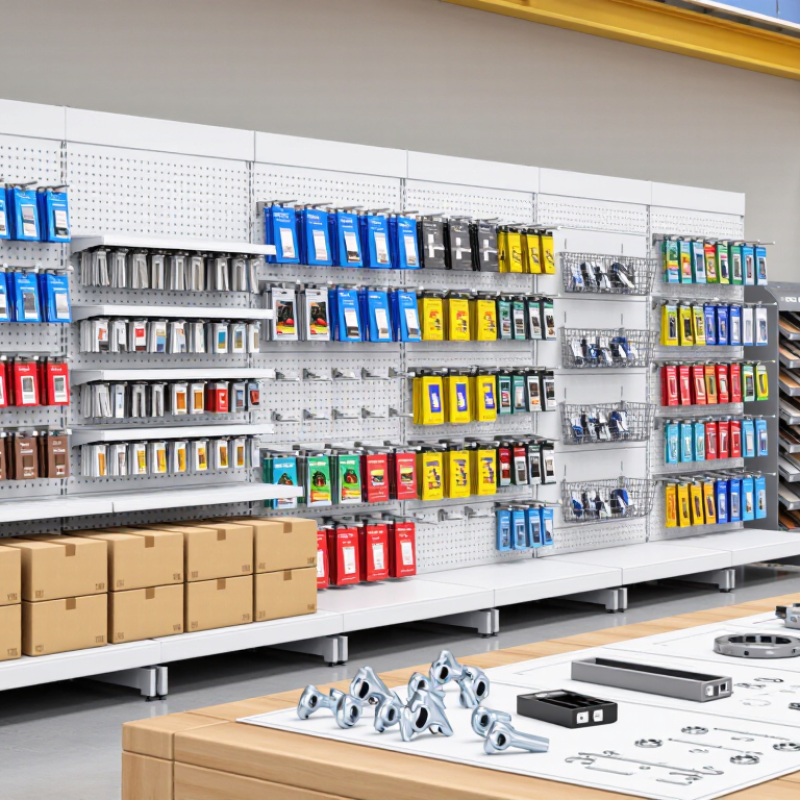
Pegboard displays are panel-based merchandising fixtures with evenly spaced holes. Hooks, shelves, baskets, and brackets fit into these openings. This modular structure lets retailers present products without rebuilding the entire wall. A small shop can display tools, packaged accessories, stationery, or home goods in one narrow area. The open grid keeps products visible and makes stock gaps easy to notice. It is simple, but not always perfect.
In retail, staff adjust hook heights to match product size and customer reach. Heavy items need suitable brackets and secure wall fixing, not just attractive spacing. For example, screwdrivers may hang on hooks, while boxed hardware rests on shallow shelves.
Clear labels beside each section reduce questions and support faster shopping. In workshops, pegboards organize hand tools above a bench. It saves space.
At exhibitions, freestanding pegboard panels create a lightweight product backdrop. Teams can change the layout between events, which reduces storage pressure and setup time. However, poor weight distribution can make a panel unstable. Installers should check the panel material, fixing method, load rating, and local safety requirements.
I have found that neat arrangement matters as much as capacity. A crowded board may hold more products, yet shoppers often understand less. Testing one section with real users can reveal awkward reach distances or weak hooks. That step is easy to skip.
China’s pegboard display manufacturers and suppliers offer several formats for retail, trade shows, workshops, and storage areas. Wall-mounted pegboards are common in small shops. They use vertical space and keep products visible at eye level. Steel panels suit heavier tools, while laminated wood panels create a warmer retail appearance.
Freestanding pegboard displays provide flexibility. Retailers can move them between aisles or change their layout during seasonal campaigns. Double-sided units hold more merchandise in limited floor space. Rotating towers work well for small packaged items, such as accessories or craft supplies. However, narrow bases may become unstable on uneven flooring. Check the frame weight and wheel quality before placing an order.
Gridwall pegboards combine metal mesh with hooks, baskets, and shelves. They support frequent product changes and are easier to clean than fabric fixtures. Slatwall-style boards offer another option, especially for clothing and boxed goods. Their horizontal grooves accept shelves and hanging arms, but they may not fit every peg accessory. Custom suppliers in China can adjust hole spacing, panel size, coatings, and packaging. Request material samples and load tests. Small details matter.
A practical supplier review should examine welding points, coating consistency, edge finishing, and replacement hardware. Photos can hide weak corners. Ask for inspection records and a clear tolerance range. No display type is perfect. The right choice depends on product weight, available space, installation time, and expected fixture changes.
| Pegboard Display Type | Typical Structure | Common Materials | Typical Size Options | Suitable Applications | Main Advantages | Important Sourcing Checks |
|---|---|---|---|---|---|---|
| Wall-Mounted Pegboard | Panel fixed directly to a wall or mounted on cleats, rails, or a support frame. | MDF Metal PVC Plywood | Custom panels commonly range from compact counter sections to full retail-wall installations. | Retail shelving, tool storage, craft displays, hardware stores, and showroom walls. | Efficient use of vertical space; hooks and shelves can be repositioned without replacing the panel. | Wall fixing method, panel thickness, hole pitch, edge finishing, fire requirements, and maximum load per accessory. |
| Freestanding Pegboard Gondola | Single-sided or double-sided panels supported by a floor base, feet, or a metal frame. | Powder-Coated Steel MDF Wire | Usually designed in modular bays; height and width are often adjustable for different store layouts. | Supermarkets, trade shows, pop-up shops, pharmacies, and open retail floors. | Portable merchandising area with access from one or both sides and good product visibility. | Base stability, anti-tip performance, caster or leveling-foot options, assembly method, and packaging protection. |
| Countertop Pegboard Display | Compact vertical panel with a weighted base or folded support for placement on a counter. | Acrylic MDF Metal Foam Board | Small-format displays commonly use a footprint suitable for checkout counters, desks, or display cabinets. | Accessories, cosmetics, stationery, small electronics, promotional items, and sample products. | Low shipping volume, quick installation, and strong visibility at eye level. | Base weight, tipping resistance, printing quality, scratch protection, and the quantity of hooks included. |
| Slatwall-Pegboard Hybrid | Combines peg holes with horizontal slots or slatwall sections on the same panel or fixture. | MDF Melamine Board Metal | Available as individual panels, wall sections, or modular retail fixtures with mixed accessory channels. | Fashion accessories, home goods, consumer electronics, and stores requiring varied display hardware. | Supports both peg hooks and shelves while allowing flexible product presentation. | Compatibility between peg hooks and slatwall accessories, slot spacing, surface durability, and edge treatment. |
| Metal Pegboard Panel | Perforated steel or aluminum sheet mounted on a wall, frame, cabinet, or workstation. | Steel Aluminum Powder Coating | Custom sheet sizes and framed modules are common; thickness and reinforcement vary by load requirement. | Tools, automotive parts, industrial supplies, sporting goods, and heavier retail products. | Higher resistance to impact and moisture than many wood-based panels. | Metal gauge, hole diameter and pitch, corrosion protection, folded edges, weld quality, and tested load capacity. |
| Acrylic Pegboard Display | Clear, frosted, colored, or printed acrylic panel with drilled holes and a base or wall fixture. | Clear Acrylic Colored Acrylic Printed Acrylic | Generally used for small and medium displays where transparency and a clean appearance are important. | Jewelry, cosmetics, eyewear, electronics accessories, premium samples, and promotional displays. | Lightweight, visually clean, and suitable for printed graphics or transparent product presentation. | Acrylic thickness, hole-edge cracking, protective film, UV resistance, scratch resistance, and base stability. |
| Wire Pegboard Basket Display | Pegboard panel fitted with wire baskets, shelves, hooks, or multi-tier product holders. | Steel Wire Metal Panel Chrome Finish Powder Coating | Tiered configurations can be customized for packaged goods, loose items, or mixed-size products. | Convenience stores, hardware outlets, gift shops, food packaging, and promotional product areas. | Good product density and easy access for products with irregular shapes or multiple stock units. | Wire diameter, weld points, coating adhesion, basket depth, hook retention, and cleaning requirements. |
| Rotating Pegboard Tower | Vertical pegboard tower mounted on a central rotating post or bearing-supported base. | Steel MDF Acrylic | Typically uses a narrow floor footprint with several display faces and multiple accessory positions. | Small accessories, toys, phone accessories, stationery, greeting products, and impulse purchases. | Displays more products within a small footprint and allows customers to rotate the unit. | Rotation smoothness, bearing durability, center-of-gravity balance, base weight, and anti-tip design. |
| Portable Trade Show Pegboard | Lightweight foldable, sectional, or tool-free assembly system designed for transport and repeated use. | Aluminum Frame MDF PVC Board Fabric Graphics | Modular sizes can be configured to fit exhibition booths, mobile sales kits, and temporary retail spaces. | Trade fairs, product demonstrations, temporary stores, events, and sales presentations. | Easy to transport, assemble, reconfigure, and reuse for different product collections. | Folded or packed dimensions, tool requirements, carrying cases, graphic replacement, and setup time. |
| Custom Printed Pegboard Display | Pegboard panel combined with direct printing, laminated graphics, logos, color matching, or shaped components. | MDF PVC Acrylic Metal | Produced to project-specific dimensions, including custom cut-outs, headers, shelves, and branded back panels. | Retail campaigns, product launches, seasonal promotions, shop-in-shop installations, and exhibitions. | Supports consistent visual merchandising and can be tailored to a specific product assortment. | Color standard, artwork format, print resolution, sample approval, surface protection, and replacement-part availability. |
When evaluating Chinese pegboard display manufacturers, begin with production evidence, not polished catalog photos. Request factory videos, workshop addresses, equipment details, and recent production records. A reliable supplier should explain how boards are cut, coated, drilled, and inspected. Ask whether production is handled internally or through subcontractors.
Review the materials carefully. Confirm board thickness, hole spacing, edge finishing, coating durability, and accessory compatibility. Request samples before approving a large order. Measure the samples yourself. Small differences can affect hooks, shelves, and retail installation. I have seen attractive samples hide weak edges and uneven paint. That mistake is expensive.
Quality control should include incoming material checks, in-process inspections, and final packing reviews. Ask for inspection photos, carton specifications, and a written tolerance sheet. Verify export experience, production capacity, lead times, and communication speed. Clear answers matter. Vague promises do not. Compare quotations by total cost, including tooling, packaging, transport, and replacement terms. A low price may reflect thinner material or limited inspection. Request customer references where possible, while protecting confidential information. Also check whether the manufacturer can adapt drawings without losing structural strength. My own assessment would not be perfect; supplier claims still need independent verification. That uncomfortable step often prevents larger problems.
This buyer-oriented evaluation model assigns the highest weight to quality consistency and customization capability. Buyers should also verify production capacity, compliance documentation, delivery reliability, communication, and after-sales support before selecting a supplier.
China’s pegboard display industry is concentrated in several manufacturing regions. Guangdong is known for metal fabrication, acrylic processing, and export-oriented assembly. Zhejiang and Jiangsu often support precision stamping, wire forming, and powder coating. Fujian also offers capable woodworking and mixed-material production. Regional strengths overlap, so location alone cannot confirm supplier quality.
Experienced suppliers usually provide complete production support. Their capabilities may include CAD development, CNC cutting, drilling, edge finishing, surface treatment, and retail-ready packaging. A reliable factory should explain material thickness, hole spacing, load limits, and installation methods clearly. Ask for production samples, not only digital drawings. Check whether hooks remain stable under repeated loading. Small details matter.
Factory visits can reveal more than polished quotations. Look for organized material storage, calibrated measuring tools, and documented inspections. Quality checks should cover dimensions, coating adhesion, sharp edges, welds, and packaging damage. Still, regional labels can mislead. A large facility may outsource critical processes, while a smaller workshop may control production carefully. I have found that both assumptions need testing. Some suppliers respond quickly but lack useful technical records. Others communicate slowly yet deliver consistent samples. Clear specifications and staged approvals reduce this uncertainty.
Choosing the right pegboard display supplier requires more than comparing online prices. In retail projects, small design errors can create expensive installation problems. Start with the board itself. Ask about steel thickness, surface coating, hole spacing, edge strength, and maximum load. A reliable supplier should provide clear test data, material details, and product samples. Request a physical sample before signing a large order. Check whether hooks fit smoothly and whether shelves remain level under weight.
Supplier experience matters just as much as product quality. Review completed projects with similar store sizes, product weights, and display layouts. Ask about customization, minimum order quantities, production capacity, and delivery schedules. Factory photos help, but video inspections or an independent quality check offer stronger evidence. Packaging also deserves attention. Weak corner protection can damage finished panels during long-distance shipping.
Communication reveals operational reliability. Notice how quickly the supplier answers technical questions and corrects unclear specifications. A capable team should confirm drawings, colors, tolerances, labeling, and inspection points in writing. Do not trust promises alone. Even experienced buyers miss small details. A hole pattern may look correct on a screen but fail during installation. Allow time for revisions and approval samples. A lower quotation can hide thicker packaging costs, inconsistent batches, or delayed replacement parts. No checklist is perfect. Careful follow-up remains necessary.
Request factory videos, workshop details, equipment lists, and recent production records. Ask how boards are cut, drilled, coated, and inspected. Do not trust catalog images alone.
Yes. Measure each sample yourself. Check thickness, hole spacing, edge quality, coating, and accessory fit. Small differences can prevent hooks or shelves from fitting properly. An attractive sample may still hide weak edges.
Confirm board thickness, hole spacing, surface treatment, and edge finishing. Check whether the coating resists scratches and repeated handling. Test hooks under repeated loading. Details matter.
Ask for incoming material checks and production inspection records. Request final packing photos, carton specifications, and tolerance sheets. Quality checks should cover dimensions, welds, sharp edges, coating adhesion, and package damage.
Ask which processes happen inside the factory. Some suppliers outsource cutting, coating, drilling, or packaging. Outsourcing is not automatically poor, but critical steps need verification. I would not assume either way.
Guangdong often supports metal fabrication, acrylic processing, and export assembly. Zhejiang and Jiangsu may offer stamping, wire forming, and powder coating. Fujian can support woodworking and mixed-material production. Location alone proves little.
Useful capabilities may include CAD development, CNC cutting, drilling, edge finishing, and retail-ready packaging. The supplier should explain load limits and installation methods clearly. Request physical samples, not only digital drawings.
Compare the total cost, including tooling, packaging, transport, and replacement terms. A low price may indicate thinner material or limited inspection. Confirm production capacity, lead times, and communication speed. Cheap is not always cheaper.
Look for organized material storage and calibrated measuring tools. Review documented inspections and current production areas. Check whether critical processes are controlled internally. A polished tour can still miss problems.
Use written specifications, tolerance limits, samples, and staged approvals. Request customer references while protecting confidential information. Verify supplier claims independently where possible. That step feels inconvenient, but it can prevent larger mistakes.
Pegboard Displays are flexible retail and storage solutions designed with evenly spaced holes for hooks, shelves, baskets, and other accessories. They are widely used in shops, trade show booths, workshops, warehouses, and home organization settings because their modular structure allows products or tools to be arranged clearly and adjusted as needs change. In China, buyers can find various options, including wall-mounted panels, freestanding units, countertop displays, rotating stands, and customized systems made from metal, wood, plastic, or mixed materials.
When evaluating Chinese manufacturers and suppliers, it is important to compare material quality, load capacity, surface treatment, dimensional accuracy, customization capabilities, production consistency, packaging, and delivery support. Major manufacturing regions may offer different strengths, such as metal fabrication, furniture production, or large-scale retail fixture manufacturing. The right supplier should provide clear specifications, reliable samples, responsive communication, quality inspections, and practical pricing. Matching the supplier’s capabilities with the intended application, order volume, design requirements, and target market can help ensure a durable and effective display solution.

FutureSpace Rack