In a compact apartment, storage is not an abstract design problem. It is the saucepan that blocks a cupboard door, or the laundry basket competing with a desk. Folding Shelves can return floor area to daily life by opening when needed and folding away afterward. Their value is practical: a shelf beside a worktable can hold a laptop, then clear the walkway when the day ends.
The pressure on urban housing is substantial. UN DESA’s World Urbanization Prospects: The 2018 Revision reported that 55% of the world’s population lived in urban areas, and projected that share would reach 68% by 2050. Urban living does not always mean a tiny home, of course. Still, in crowded rooms, a fixed shelf can feel like one more permanent obstacle. A fold-down design offers a useful compromise, though hinges, wall strength, and safe installation still matter. Space-saving furniture is not magic.
Design reformer William Morris offered a lasting test for household objects: “Have nothing in your houses that you do not know to be useful or believe to be beautiful.” Morris was a designer, not a Folding Shelves industry specialist. No verifiable category-specific expert quotation was supplied, so attributing one would risk inventing a source. His principle nevertheless fits the question: a shelf should earn its place through daily use, not merely look clever in a product photo. And sometimes, the honest answer is that a folding shelf helps—but does not fix a room with too little storage.
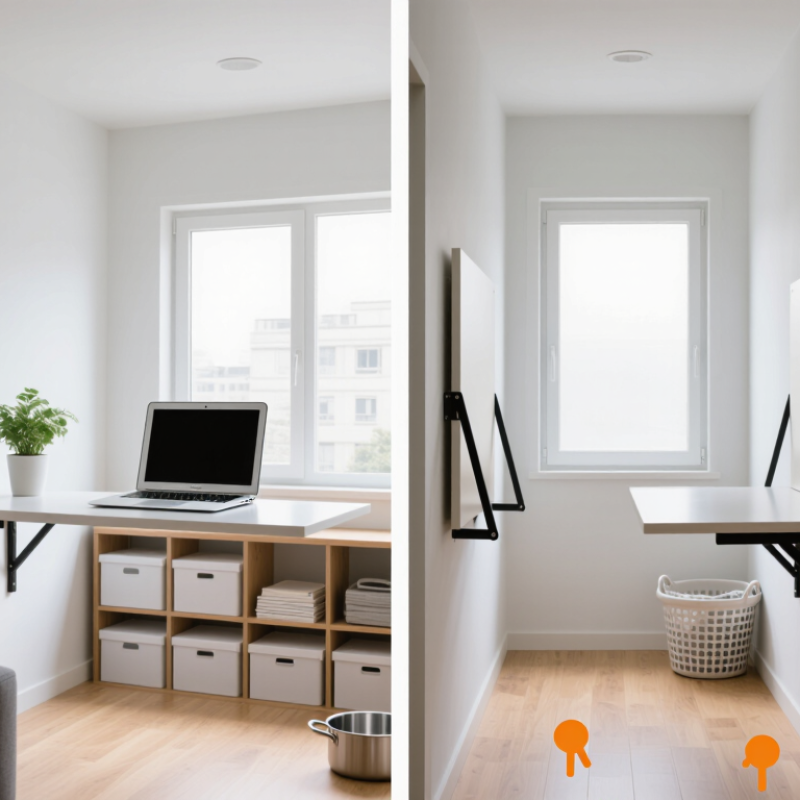
Folding shelves are wall-mounted platforms that pivot between a usable position and a folded position close to the wall. Hinges connect the shelf to a support frame or brackets, which carry its weight when it is open. Some models use locking arms; others rely on hinged brackets that brace the shelf at an angle. The exact mechanism matters, because a shelf must be fully supported before anything is placed on it.
In a narrow kitchen, a fold-down shelf can hold a mixing bowl while you prepare food, then tuck away to clear the walkway. In a laundry area, it can provide a temporary spot for folded clothes. Simple, but useful. Check the shelf’s stated load limit and follow the installation instructions. The wall surface and fasteners must suit the shelf and its expected load; drywall alone may not provide enough support. A shelf attached to wall studs or suitable anchors is generally more secure. Check the hinges and brackets now and then, too. They can loosen with repeated use, and even a well-installed shelf may wobble if overloaded. One small drawback: folded shelves still take up some wall space, and their open position can be easy to bump in a tight room.
Folding shelves create usable storage without claiming permanent space. When open, they hold jars, folded towels, or a laptop; when closed, the surface sits close to the wall. That can free a narrow walkway or keep a small table clear. Less clutter. The U.S. Census Bureau’s Characteristics of New Housing report puts the median floor area of new single-family homes at 2,286 square feet in 2023, down from 2,467 in 2015. Those figures describe new homes, not every apartment, but they show why efficient layouts matter.
The space-saving benefit depends on placement. A shelf above a laundry machine can hold detergent while leaving the floor clear for a basket. In a kitchen, a fold-down ledge can serve as a brief prep surface, then tuck away. Measure the shelf’s open depth and the path around it before installation. A folded shelf still takes up wall space, and hinges need room to move. Measure first.
There are trade-offs. Check the maker’s stated load limit, fasten the brackets to suitable wall support, and avoid placing heavy items where they could fall. A slight wobble matters. Folding hardware can loosen with frequent use, so inspect it occasionally. It may not suit objects needed all day; opening and closing a shelf becomes irritating surprisingly fast. Choose a location where the shelf can stay open during regular tasks, then fold flat when the room needs clear floor space.
Where Folding Shelves Are Most Useful
Folding shelves work best where a surface is needed only at certain moments. In a narrow entryway, a wall-mounted shelf can hold keys or a grocery bag, then fold flat to clear the walkway. In a laundry area, it can provide a spot for sorting clothes without permanently taking up floor space. The National Association of Home Builders’ 2024 buyer-preference survey found that 86% of buyers considered a laundry room essential or desirable. A compact folding surface can make that hardworking room more usable, even when it is not spacious.
Home offices are another practical location. The U.S. Census Bureau’s 2023 American Community Survey reported that 13.8% of U.S. workers worked from home. A fold-down desk or shelf can create room for a laptop during work hours and free the area afterward. Small apartments may benefit especially. Still, check the opened shelf’s depth and hinge clearance; a chair or door can block it. Easy to overlook.
Kitchens and bathrooms can use folding shelves for occasional tasks, such as setting down a mixing bowl or toiletries. Choose a moisture-resistant finish in damp rooms, and fasten the shelf into suitable wall supports. A shelf that wobbles under a full laundry basket is not useful. Load limits matter. These shelves also need space to fold, so measure the wall and the open position before installation.
| Location | Typical Items | Practical Shelf Size | Why Folding Helps | Planning Tip |
|---|---|---|---|---|
| Kitchen | Spices, mugs, small appliances, or prep items | About 24–36 in wide and 8–12 in deep | The shelf can be folded down when counter or walkway space is needed. | Position it within easy reach, but keep it clear of doors, cabinets, and cooking surfaces. |
| Bathroom | Toiletries, hand towels, and everyday personal-care items | About 18–30 in wide and 6–10 in deep | A compact shelf can provide storage without permanently projecting into a narrow room. | Choose moisture-suitable materials and avoid locations where the shelf obstructs fixtures or movement. |
| Laundry Area | Detergent, folded clothing, or a temporary sorting surface | About 24–36 in wide and 10–14 in deep | It creates a useful surface that can be folded away when the area is busy. | Check that the shelf does not interfere with appliance lids, doors, or ventilation clearances. |
| Entryway | Keys, gloves, small bags, or mail | About 18–30 in wide and 8–12 in deep | Folding it back can help keep a tight passageway open between uses. | Keep the shelf clear of the door swing and avoid placing it where it narrows the walking route. |
| Home Office | Books, stationery, a laptop, or a temporary work surface | About 24–36 in wide and 10–14 in deep | It adds a surface in a room that may also serve as a bedroom or living area. | Allow enough room for the intended task, and verify the hardware is suitable for the expected load. |
| Living Room or Bedroom | Books, a small lamp, or personal items | About 18–36 in wide and 8–12 in deep | It offers occasional storage while reducing the shelf’s projection when not in use. | Mount into suitable structural support and follow the shelf and bracket installation instructions. |
Shelf sizes are general planning ranges, not product specifications. Available folded clearance, installation requirements, and load limits vary by shelf design and wall construction.
Folding shelves work best when their materials match the room. In a kitchen, powder-coated steel handles frequent wiping and feels sturdy beside jars or small appliances. In a bedroom, a wooden shelf can soften the look, though it may be heavier and less tolerant of moisture. For bathrooms or laundry areas, check that finishes resist damp air. A shelf that looks attractive in a photo may swell or rust in the wrong spot.
Design matters just as much. A wall-mounted drop-leaf shelf keeps the floor clear and can serve as a temporary desk or plant stand. A folding rack with several tiers suits laundry, but needs enough depth to stay stable when loaded. Check the hinge, locking support, and stated weight limit before buying. Thin brackets can flex. That matters. Measure the wall and the folded shelf, too; a unit can still block a doorway when closed.
Choose a material you can maintain, not only one that matches the décor. Metal is easy to clean, while sealed wood needs gentler care. Plastic models are light, but some wobble under uneven loads. I’d question any design that feels loose during setup, even if its capacity sounds generous. Leave space around the hinges, and test the shelf with a modest load before relying on it every day.
Choosing folding shelves starts with the space they occupy when both open and closed. Measure the wall, nearby doors, and the walking route; a shelf that blocks a cupboard is not a space-saver. The U.S. Census Bureau’s 2023 Characteristics of New Housing report puts the median floor area of newly completed single-family homes at 2,286 square feet. That national figure does not describe every apartment or small home, but it offers useful context: floor area varies, so measure your own room rather than relying on averages. Small detail. Check the shelf’s stated load limit and match it to what you plan to store, such as cookbooks or folded towels.
Choose a mounting style suited to your wall, and follow the manufacturer’s installation guidance for fasteners and load limits. Consider shelf depth, too: shallow shelves can keep a narrow passage clear, while deeper ones may better hold baskets. Think about what stays on the shelf when it folds. If items must be moved every time, the design may prove less convenient than expected. I’ve found that planning around one daily-use item is often more practical than trying to store everything.
Tips: Mark the open shelf outline on the wall with painter’s tape. Open nearby doors and walk past it. If the route feels tight, choose a narrower shelf or a different location.
Measure the wall, nearby doors, and walking path. Check the shelf when open and folded. A closed shelf can still block a doorway.
Powder-coated metal handles frequent wiping and feels sturdy beside jars or small appliances. Choose a finish suited to regular cleaning.
Yes. Wood can make a bedroom feel warmer, but it may be heavy and less tolerant of moisture. Keep it dry.
Inspect the hinges, locking supports, and stated weight limit. Try a modest load first. Thin brackets may flex.
A multi-tier rack can hold folded towels or laundry baskets. Check its depth and stability before loading it.
Mark its open outline on the wall with painter’s tape. Open nearby doors and walk past it. That test helps.
Match the mounting style to your wall. Follow the installation guidance for fasteners and load limits. I’d check twice.
Check whether stored items need to be removed before folding. Moving them every day could make the shelf less convenient. I may be overthinking it, but plan around one daily-use item.
Folding Shelves are practical storage solutions designed to open when needed and fold away when not in use. Their hinged or collapsible structure helps free up floor space while keeping everyday items within reach. In a small home, they can provide useful storage or display space without making a room feel crowded, and they can be especially handy in kitchens, bathrooms, bedrooms, laundry areas, and compact workspaces.
Available in different materials and designs, folding shelves can suit a range of tasks, from holding lightweight essentials to supporting sturdier household items. When choosing one, consider the available wall or floor space, the shelf’s weight capacity, how often it will be folded, and whether its material suits the room’s conditions. A well-matched shelf can make a tight space more organized, flexible, and comfortable to use.

FutureSpace Rack