Who Are the Best Heavy Duty Rack Manufacturers in China?

Time:2026-11-14 Author:Oliver
0%

Choosing among China’s Heavy Duty Racks manufacturers takes more than comparing catalogue prices. A rack may look identical in two photographs, yet differ in steel thickness, beam connections, weld quality, and stated load capacity. Those differences affect safety, service life, and the usable space above a warehouse floor. Small details count.

The MHI and Deloitte 2024 Annual Industry Report found that 55% of surveyed supply-chain professionals planned to increase technology investment over the following two years. The report does not measure rack demand, but it reflects the wider push to modernize logistics operations. For buyers, that makes careful equipment selection especially relevant. Published capacity figures need context. Are they per beam, per bay, or based on a specified configuration?

This guide compares manufacturers through practical criteria: engineering support, material specifications, quality-control processes, customization, lead times, and after-sales service. Look for clear drawings, traceable test records, and references for installations with similar loads. A polished catalogue is not proof. Nor does a low quote reveal the full cost of installation, maintenance, or replacement. There is no single best supplier for every warehouse. The right choice depends on pallet dimensions, handling equipment, building conditions, and local project requirements. Some details may still need independent verification. That is worth admitting before a purchase, not after a rack is loaded.
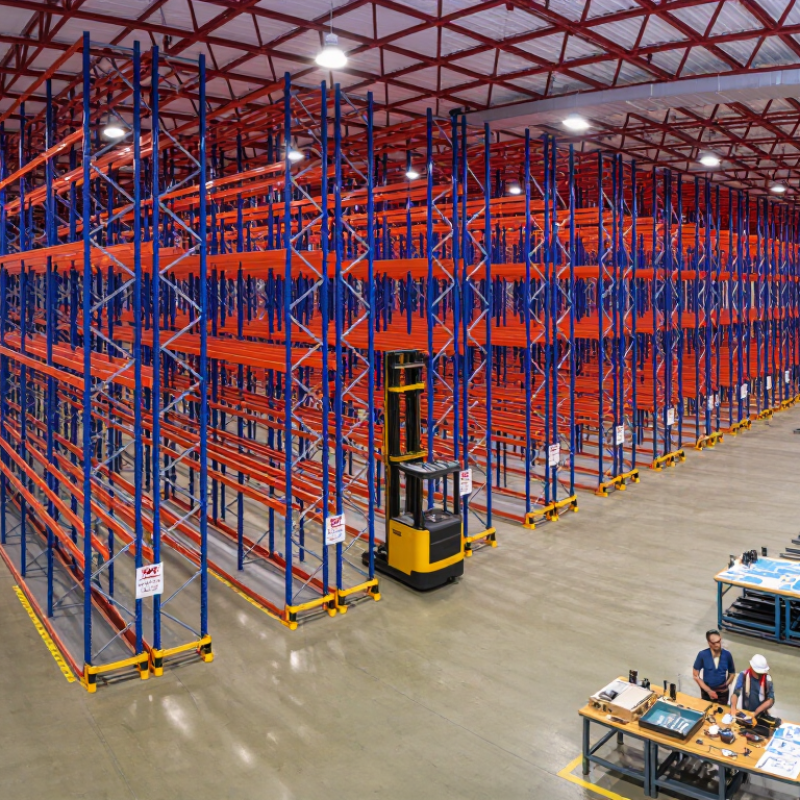
Who Are the Best Heavy Duty Rack Manufacturers in China?

What Heavy-Duty Racking Is and Where It Is Used

Heavy-duty racking is a storage system built to hold substantial loads, often on pallets. Its steel frames and beams create adjustable levels for forklifts to access goods. Warehouses use it for palletized stock, spare parts, building materials, and other bulky inventory. You may also find it in distribution centers, manufacturing plants, and agricultural storage buildings. The right design depends on the load’s weight, dimensions, handling equipment, and available floor space. Details matter.

Common configurations include selective pallet racks, which provide direct access to each pallet, and drive-in systems, which store more goods in less space. High-density layouts can improve storage capacity, but they may limit access and require more careful stock rotation. Before choosing a system, operators should check floor conditions, aisle widths, sprinkler clearance, and the rack’s stated load limits. Those limits are not suggestions. Loads should be placed evenly, and damaged uprights or loose connections need prompt attention. A practical assessment should include daily workflow, not just the number of pallets a building can hold. It is easy to overlook that point.###

How China’s Heavy-Duty Rack Manufacturing Industry Is Organized

China’s heavy-duty rack industry is a connected production network, not a single factory type. Steel suppliers provide coils and sections, while rack producers cut, punch, weld, and finish components. Some factories handle most steps in-house; others rely on specialist suppliers for powder coating or fasteners. The division is not always tidy.

Engineering teams turn warehouse requirements into upright frames, beams, bracing, and load plans. A beam’s size and connection details affect how a bay performs under pallet loads. Factories may use roll-forming lines for repeated profiles and welding stations for frame components. Sample assembly and dimensional checks help catch misaligned holes or uneven finishes. Small errors matter.

Manufacturers also differ in how they support projects. Some focus on standard pallet-rack designs; others coordinate custom layouts, installation, and replacement parts. Buyers can ask for drawings, stated load limits, material specifications, and inspection records. A clear answer is more useful than a polished brochure. Still, paperwork alone cannot show how consistently a factory controls production, and a site visit may not reveal every weakness. The picture remains imperfect.

Which Chinese Manufacturers Are Known for Heavy-Duty Racking

Chinese manufacturers known for heavy-duty racking often offer broad product ranges, scalable production, and practical customization. Their catalogs may include selective pallet racks, drive-in systems, cantilever racks, and mezzanines. This variety helps warehouses match layouts to pallet sizes, forklift routes, and available ceiling height. Look closely. A credible supplier should explain beam capacity, upright spacing, steel thickness, and assumed load conditions. Drawings and load tables matter more than a polished showroom. Ask how welds, coatings, and dimensional tolerances are checked during production. Details count.

For a useful comparison, request a layout based on your actual pallet dimensions and handling equipment. Ask for references from facilities with similar rack heights and operating loads, not just attractive project photos. Then verify installation guidance, inspection documents, spare-part availability, and communication after delivery. A low quote can conceal thin steel, unclear specifications, or freight assumptions. Some suppliers document these points less thoroughly than others, so ask direct questions and review the answers before committing.

How to Compare Rack Quality, Certifications, and Customization

A heavy-duty rack can look solid and still be poorly specified. Compare steel thickness, weld consistency, beam-lock engagement, and published load ratings—not just paint and price. Ask for design calculations tied to the actual bay dimensions, pallet loads, and floor conditions. ANSI MH16.1-2023 sets design and testing requirements for industrial steel storage racks. Request evidence that the proposed system was engineered to the relevant standard, and check that the load plaques match the final layout. Small details matter.

Certifications need scrutiny. ISO 9001 concerns a manufacturer’s quality-management system; it does not certify every rack design as safe. Verify the certificate’s scope, issuer, and current validity, then ask how incoming steel, welding, and finished products are inspected. The U.S. Bureau of Labor Statistics recorded 930 fatal work injuries in transportation and warehousing in 2023. This figure is not rack-specific, but it shows why storage design belongs in a wider safety review. That distinction matters.

Customization should solve measurable site constraints. Give manufacturers clear aisle widths, forklift turning needs, ceiling height, seismic conditions, and the heaviest pallet weight. Compare drawings and load tables before approving changes to beam length or upright spacing. Ask how future reconfiguration affects capacity. A custom fit is useful, though it can complicate replacement parts. Request a sample bay or inspection photos, plus written tolerances and installation guidance. A glossy finish is reassuring, but it proves little.

How to Choose a Manufacturer for Your Warehouse Needs

Choosing a heavy duty rack manufacturer starts with your warehouse, not a product catalogue. Measure clear ceiling height, aisle widths, column spacing, and door locations. Record the heaviest pallet load and how weight sits across each beam. Ask for a layout and load calculations based on those details. Small measurement errors can create expensive problems later. Details matter.

Review the engineering drawings, steel specifications, connection design, and finish options. Ask how welds and components are inspected, and request test documents that match the proposed rack system. Load labels should be clear and consistent with the design. Ask for references from warehouses with similar goods and equipment. Ask for proof. A polished brochure is not proof of reliable performance; it is easy to mistake presentation for engineering quality.

Discuss installation guidance, delivery timing, replacement components, and response times before comparing quotes. Clarify what the price includes, such as anchors, protective guards, and on-site support. Check that the proposed layout allows forklifts to turn and staff to pick goods safely. Compare long-term service and fit, not just the initial cost. One detail is often overlooked: warehouse operations change, and a layout that works today may feel cramped next year.

FAQS

What is heavy-duty racking used for?

It stores substantial loads, often on pallets. Warehouses use it for spare parts, building materials, and bulky stock. Forklifts access goods from adjustable levels.

Where can heavy-duty racking be installed?

Common sites include warehouses, distribution centers, manufacturing plants, and agricultural buildings. Floor conditions and ceiling height matter.

What is the difference between selective and drive-in racks?

Selective racks provide direct access to each pallet. Drive-in systems fit more goods into less space, but access is more limited. Stock rotation needs care.

What details should be checked before choosing a rack?

Check pallet weight and dimensions, aisle width, floor conditions, forklift routes, and sprinkler clearance. Measure twice. Guessing is risky.

How can buyers compare rack quality?

Review steel thickness, weld consistency, beam-lock engagement, and published load ratings. Ask for calculations based on your actual layout and floor conditions. Paint proves little.

What should buyers ask a supplier to provide?

Request drawings, load tables, installation guidance, inspection records, and spare-part details. Ask about similar facilities and how production quality is checked. Photos alone are not enough.

Do quality-management certificates prove that a rack design is safe?

No. A quality-management certificate concerns the manufacturer’s processes, not every rack design. Check its scope and validity, then review design evidence and load plaques.

What information is needed for customized racking?

Provide aisle widths, forklift turning needs, ceiling height, seismic conditions, and the heaviest pallet weight. Ask how changes affect capacity and replacement parts. Customization can help, though it may complicate repairs.

Conclusion

Heavy Duty Racks are designed to store heavy, bulky goods in warehouses, factories, and distribution centers. Their capacity, layout, and configuration depend on the types of products handled, available floor space, and the equipment used for loading and retrieval. China’s manufacturing industry includes producers with different specializations, production capabilities, and levels of customization, so buyers should look beyond price when evaluating potential suppliers.

A careful comparison should consider structural quality, materials, load ratings, safety features, relevant certifications, and the manufacturer’s ability to tailor a system to specific warehouse requirements. Buyers should also assess design support, production consistency, communication, delivery planning, and after-sales service. Matching these factors to a facility’s storage goals can help businesses choose a suitable manufacturer and create a reliable, efficient storage solution.

Oliver

Oliver

Oliver is a seasoned marketing professional with a wealth of expertise in driving brand awareness and engagement. With a deep understanding of our company's product offerings, he consistently delivers high-quality content that enriches our professional blog. His insights not only shed light on......