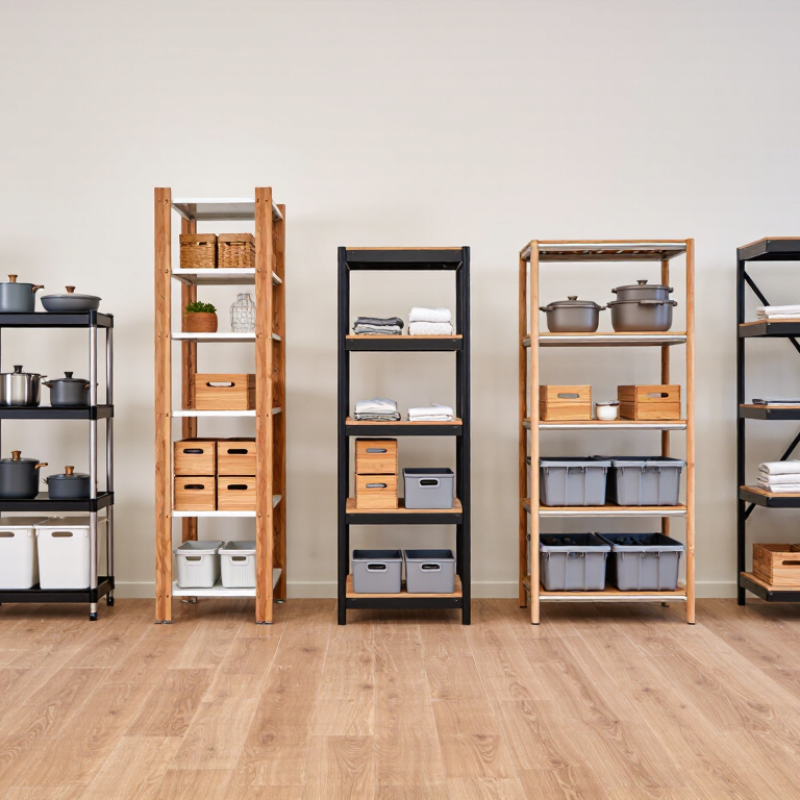
Choosing the right storage system can change how a room works every day. Adjustable Shelving offers that flexibility without demanding a permanent layout. Shelves can move upward for tall cookware, downward for folded clothing, or closer together for small boxes. That simple change often prevents wasted vertical space.
Storage designer Lisa Zaslow says, “The best storage system is one that supports the way you actually live.” Her point matters here. A beautiful shelf is still inconvenient if it bends, wobbles, or makes daily items difficult to reach. In this guide, we examine seven Adjustable Shelving units worth considering for 2026. The comparison focuses on weight capacity, shelf movement, frame strength, assembly, finish quality, and real-world value. We also consider details that product photos often hide. Think of uneven floors, crowded corners, loose hardware, and shelves that sag after several months.
No single unit wins every room. Some models prioritize heavy-duty performance. Others save space or look better in living areas. A few try to do both and fall slightly short. That is worth admitting. Product ratings can also change with new materials, updated designs, and user assembly quality. Our selections therefore reflect practical testing priorities rather than empty promises. If you need storage for a garage, pantry, office, or rental home, this guide helps narrow the decision. Measure carefully. Check the load rating. Leave room for future changes. Your shelves may need to adapt sooner than expected.
What Adjustable Shelving Units Are: Types, Uses, and 2026 Applications
7 Best Adjustable Shelving Units for 2026?
What Adjustable Shelving Units Are: Types, Uses, and 2026 Applications
Adjustable shelving units have shelves that move between fixed slots, brackets, or rails. They adapt as storage needs change. A practical setup taught me one lesson: measure the largest item first. Otherwise, wasted space appears quickly.
Seven useful formats cover most settings: boltless steel for garages, wire shelving for kitchens, modular plastic for light supplies, wooden systems for offices, mobile shelving for workshops, corner units for tight rooms, and heavy-duty racks for warehouses. Steel handles boxed equipment well. Wire improves airflow around food containers and cleaning supplies. Plastic resists moisture, but it may bend under concentrated weight. Wooden shelves look warmer, though they need protection from damp floors.
In 2026, adjustable shelving supports flexible workspaces, compact apartments, home repair areas, and small retail storage. Some units include wheels, tool hooks, foldable work surfaces, or sensor-ready inventory labels. These features save time when stock changes often. Still, convenience should not replace inspection. Check the stated load rating, tighten connections, and anchor tall units where necessary. I once placed heavy boxes high on a narrow shelf. It was stable, but reaching them felt unsafe. That choice needed more thought. Shelves should also leave walking space and allow doors to open fully. In humid rooms, coated metal or sealed plastic usually performs better than untreated materials.
How ISO 7170 Tests Strength, Durability, and Stability in Shelving Units
Choosing among the 7 best adjustable shelving units for 2026 requires more than measuring shelf height. ISO 7170 offers a practical framework for examining storage furniture. The standard evaluates strength, durability, and stability under controlled conditions. During testing, shelves receive specified loads, while repeated use exposes weak joints and fittings. This matters when a unit holds books, tools, or neatly stacked kitchenware.
Strength testing asks whether shelves and supporting parts resist bending, separation, or failure. Durability testing repeats actions that mimic everyday use, including loading, unloading, and component movement. Stability testing checks whether the unit remains safely grounded during expected use. Adjustable systems deserve close attention because movable pins, brackets, and holes can create small points of weakness. A shelf may look rigid yet shift when weight rests near its front edge. That detail is easy to miss.
When reviewing a unit, compare its tested load information with your real storage habits. Check the material, connection quality, leveling features, and instructions for distributing weight. ISO 7170 results improve confidence, but they do not replace careful installation or sensible loading. I would also inspect the shelves after assembly, especially around adjustment points. My earlier assumption was that thicker panels always meant better performance. That is not always true; joints and balance often decide the outcome. Reliable furniture should perform quietly, repeatedly, and without visible movement.
Seven Top Adjustable Shelving Units Compared by Capacity and Adjustability
7 Best Adjustable Shelving Units for 2026?
Seven Top Adjustable Shelving Units Compared by Capacity and Adjustability
A practical comparison starts with load rating, shelf movement, and everyday stability. The seven strongest options include heavy-duty steel, wire, garage, modular plastic, wooden, corner, and mobile shelving units. Heavy-duty steel usually supports the greatest weight, often above 800 pounds per shelf. Garage units offer wide spans for boxes and tools. Wire shelves improve airflow, but small items may need liners. Modular plastic is lighter and easier to reposition. Wooden shelving looks warmer, although moisture can cause swelling. Corner units save floor space. Mobile shelves add flexibility, but loaded casters can become difficult to steer. Ratings vary by shelf spacing and installation quality.
Tips: Measure the tallest stored item before assembly. Leave one adjustment level unused for future changes. Place heavier containers near the bottom. Check every connector after the first week. Do not trust a large capacity number without reviewing evenly distributed load limits.
In my experience, boltless steel frames provide the best balance between capacity and adjustment. Their shelves can move in small increments, which helps with mixed storage. Wire systems are easier to clean, but thin objects sometimes fall through. A wooden unit may feel sturdy while holding less weight than expected. That difference is easy to miss. I also prefer wall anchoring for tall units, even when the frame feels stable. One weakness remains: adjustable shelves rarely stay perfectly level after repeated changes. A small correction can take patience.
7 Best Adjustable Shelving Units for 2026? — Seven Top Adjustable Shelving Units Compared by Capacity and Adjustability
| Unit |
Construction |
Overall Dimensions
(W × D × H) |
Shelf Count |
Capacity per Shelf |
Total Rated Capacity |
Adjustment Interval |
Tool-Free Assembly |
Mobility |
Best Use |
| Unit 1: Heavy-Duty Boltless Rack |
Powder-coated steel frame with steel shelves |
48 × 24 × 72 in
(122 × 61 × 183 cm) |
5 |
800 lb
(363 kg) |
4,000 lb
(1,814 kg) |
1.5 in
(3.8 cm) |
Yes |
Stationary |
Garages, workshops, and storage rooms |
| Unit 2: Industrial Wire Shelving |
Chrome-plated steel posts and ventilated wire decks |
48 × 18 × 72 in
(122 × 46 × 183 cm) |
5 |
600 lb
(272 kg) |
3,000 lb
(1,361 kg) |
1 in
(2.5 cm) |
Yes |
Optional casters |
Pantries, utility rooms, and commercial storage |
| Unit 3: Rivet-Style Storage Rack |
Steel uprights with laminated wood or composite decking |
36 × 18 × 72 in
(91 × 46 × 183 cm) |
5 |
500 lb
(227 kg) |
2,500 lb
(1,134 kg) |
1.5 in
(3.8 cm) |
Yes |
Stationary |
Boxes, tools, and medium-weight household items |
| Unit 4: Adjustable Plastic Shelving |
High-density plastic shelves with resin posts |
36 × 18 × 72 in
(91 × 46 × 183 cm) |
5 |
350 lb
(159 kg) |
1,750 lb
(794 kg) |
1.25 in
(3.2 cm) |
Yes |
Optional casters |
Damp areas, laundry rooms, and food-storage spaces |
| Unit 5: Narrow Utility Shelf |
Powder-coated steel frame with wire shelves |
24 × 14 × 60 in
(61 × 36 × 152 cm) |
5 |
250 lb
(113 kg) |
1,250 lb
(567 kg) |
1 in
(2.5 cm) |
Yes |
Stationary |
Small closets, kitchens, and compact work areas |
| Unit 6: Mobile Wire Rack |
Steel wire shelves with a tubular steel frame |
36 × 18 × 72 in
(91 × 46 × 183 cm) |
5 |
350 lb
(159 kg) |
1,750 lb
(794 kg) |
1 in
(2.5 cm) |
Yes |
4 swivel casters, 2 locking |
Flexible storage and frequently rearranged workspaces |
| Unit 7: Garage Cabinet Shelving |
Enclosed or semi-enclosed steel cabinet with adjustable shelves |
36 × 18 × 72 in
(91 × 46 × 183 cm) |
4 |
400 lb
(181 kg) |
1,600 lb
(726 kg) |
2 in
(5.1 cm) |
Usually requires basic assembly |
Stationary |
Dust-sensitive tools, supplies, and secured storage |
Capacity figures are maximum evenly distributed loads per shelf and assume level installation on a suitable surface. Actual ratings vary according to shelf material, frame configuration, anchoring, and manufacturer testing. Do not exceed the lowest-rated component or use the units for climbing or support.
Steel, Wire, and Wood Shelves: Material Performance and Maintenance Factors
For the seven best adjustable shelving units in 2026, material performance matters more than appearance. Steel offers the strongest long-term option for garages, workshops, and storage rooms. Its rigid frames resist dents, twisting, and heavy point loads. The World Steel Association reports that recycling one tonne of steel can save about 1.4 tonnes of iron ore. However, untreated steel may rust in damp basements. Powder coating helps, but damaged edges still need quick touch-ups.
Wire shelving improves airflow and reduces dust buildup around stored items. It suits laundry rooms, pantries, and utility spaces. Yet thin wire can leave marks on soft boxes or allow small items to fall through. Check each unit’s tested load rating, shelf spacing, and center-support design. ANSI/MH16.1 guidance shows why storage capacity depends on structural design, not material labels alone. Wood shelves feel warmer and reduce rattling. The USDA Forest Products Laboratory’s Wood Handbook reports that wood can shrink 2% to 8% radially and 6% to 12% tangentially during drying. Humidity changes may create gaps or slight warping. This makes wood attractive, but not maintenance-free. Rankings are imperfect here.
Tips: Match the shelf to its room. Wipe steel with a dry cloth, inspect wire welds, and seal exposed wood edges. Keep heavy cartons low. Measure twice. A level shelf is safer. Check fasteners every few months, especially after moving the unit.
7 Best Adjustable Shelving Materials for 2026
Typical performance ratings for common adjustable shelving materials. Ratings use a 1–5 scale, where 5 indicates stronger performance, better moisture tolerance, or easier maintenance.
How to read the chart: Powder-coated steel and galvanized wire offer the strongest overall performance for heavy loads and humid areas. Solid wood and plywood provide good strength but need periodic sealing or refinishing. MDF and particleboard are easier to clean but are more vulnerable to moisture and swelling.
How OSHA 1910.176(b) Guides Safe Shelving Placement and Load Management
7 Best Adjustable Shelving Units for 2026?
Adjustable shelving is useful when inventory sizes change. The safest choice is not always the tallest unit. Select frames with clear load ratings, stable uprights, secure shelf clips, and adjustable levels. Confirm every rating with the manufacturer’s instructions. Never estimate capacity by appearance.
OSHA 1910.176(b) focuses on safe clearances where mechanical handling equipment operates. Shelving should not narrow aisles, block doorways, crowd loading docks, or obstruct turning areas. Permanent aisles need clear boundaries and visible markings. Measure the path with a loaded cart or forklift, not an empty one. Small errors become serious when pallets swing.
Load management also needs discipline. Place heavier containers on lower shelves. Keep weight centered and distribute it across the shelf surface. Store unstable items below shoulder height. Leave enough room for safe hand access. Inspect loose clips, bent beams, leaning frames, and damaged floors before use. Remove questionable sections from service.
A useful 2026 comparison should examine adjustability, bracing, shelf depth, anchoring options, and inspection access. It should also consider the actual work area, not only product photographs.
I have found that “maximum capacity” labels can encourage overconfidence. Ratings may depend on spacing, installation, and load distribution. OSHA provides a safety framework, but trained judgment remains necessary. One overlooked aisle can undermine an otherwise excellent shelving plan.
Conclusion
This guide explores seven of the best Adjustable Shelving units for 2026, focusing on how their designs support organization in homes, offices, workshops, warehouses, and other practical settings. It explains the main types of adjustable shelving, including steel, wire, and wood systems, and compares them by load capacity, flexibility, stability, ease of reconfiguration, and maintenance needs. Readers will learn how shelf spacing and modular construction can improve storage efficiency while accommodating changing inventory or equipment.
The article also introduces the role of ISO 7170 in evaluating shelving strength, durability, and stability, helping readers understand the importance of reliable performance testing. In addition, it discusses how OSHA 1910.176(b) principles can guide safe shelving placement, balanced load distribution, aisle clearance, and responsible storage practices. Together, these factors provide a practical framework for selecting, installing, and maintaining shelving that remains adaptable, dependable, and safe throughout 2026.

 FutureSpace Rack