For global buyers, Endcap Displays are more than attractive fixtures at aisle ends. They are short, physical sales arguments. A shopper may notice one while reaching for pasta, pet food, or seasonal goods. The strongest designs make that moment useful, clear, and easy to trust.
Retail researcher Dr. Herb Sorensen has emphasized, “The last three feet of the store are where shoppers make decisions.” His observation explains why endcaps deserve careful planning. In 2026, buyers will compare modular frames, recyclable materials, digital screens, lighting, and rapid assembly systems. Yet technology alone cannot guarantee performance. A simple wire unit may outperform an expensive illuminated display when restocking is difficult. Sometimes, less works better.
This guide examines practical Endcap Displays for international retail programs. It considers product visibility, shopper movement, pallet efficiency, durability, and local merchandising habits. It also reviews how suppliers can adapt dimensions, graphics, languages, and colors across markets. Safety remains essential, including stable bases, rounded edges, secure components, and responsible material selection. These details protect shoppers and reduce operating problems.
Experience teaches an uncomfortable lesson. A display can look impressive in a catalog but fail beside a crowded checkout aisle. Buyer feedback, store trials, and sales data should challenge the original design. Results may differ between supermarkets, pharmacies, convenience stores, and warehouse clubs. Therefore, the best choice is not always the newest format. It is the format that performs reliably, communicates quickly, and supports efficient retail work across real stores.
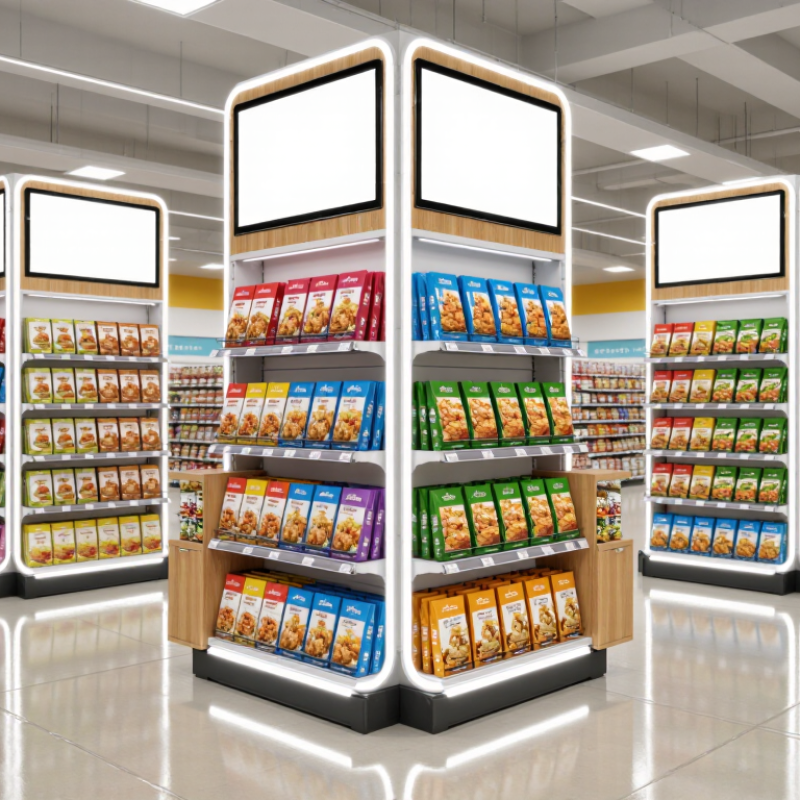
What Are Endcap Displays and Why Do Global Buyers Use Them?
Endcap displays sit at the front or back of a retail aisle, facing passing shoppers. They turn unused aisle space into a focused selling area. Global buyers use them to highlight seasonal products, new arrivals, and high-demand items. Their position improves visibility before shoppers enter the main shelf section. In my retail projects, a well-planned endcap often attracted attention within seconds. Still, visibility alone does not guarantee sales.
Endcaps also support flexible merchandising across different markets. Buyers can select metal frames, printed panels, wood structures, or lightweight modular units. The right choice depends on store layout, product weight, shipping distance, and local shopping habits. A display for a busy supermarket may need strong wheels and quick assembly. A premium department store may require cleaner finishes and softer lighting. Measurements can be surprisingly easy to overlook. A small fitting error can delay installation or block nearby products. The first design is rarely perfect, and buyer feedback should reshape it.
Tips:
Confirm aisle dimensions before production. Check loading limits and installation time. Use clear product grouping and readable price information. Leave enough space for shoppers and carts. Test colors under the store’s actual lighting. Review local language, packaging rules, and safety requirements with qualified professionals. A simple mock-up can reveal problems that drawings miss.
Which Types of Endcap Displays Will Define Retail in 2026?
Endcap displays will define retail in 2026 through flexibility, not decoration alone. Modular systems will let stores change shelves, hooks, and sign panels within minutes. This matters when seasonal products, local pricing, or regional regulations change quickly. In store trials, adjustable displays often reduce empty gaps and improve product visibility. Small details matter. Clear aisle access matters too.
Digital endcaps will support live pricing, product education, and multilingual content for global buyers. However, a bright screen cannot repair poor product placement. Touchless sensors, QR codes, and low-energy lighting can create useful interactions without slowing shoppers. Retail teams should measure dwell time, conversion, accessibility, and maintenance costs. A display that attracts attention but needs daily technical support may become an expensive distraction.
Sustainable endcaps will also shape purchasing decisions. Recycled metal, certified wood, replaceable graphics, and flat-pack shipping can reduce waste across markets. Buyers should request material documentation and test stability under local store conditions. Humidity, heavy cartons, and uneven floors expose weak designs quickly. I have seen attractive prototypes fail after repeated loading. That is uncomfortable, but useful. The strongest 2026 displays will combine modular construction, responsible materials, measurable performance, and restrained technology. Global buyers may need to accept that one universal format rarely fits every store.
How to Compare Materials, Sizes, and Display Features
For global buyers, an endcap display should be compared through materials, dimensions, and operating conditions—not appearance alone. Powder-coated steel suits heavy products and repeated retail use. Corrugated board reduces freight weight and supports short campaigns. Recycled plastic can resist moisture, but its sourcing and end-of-life route require verification. The 2024 Global Shopper Marketing Report from Shop! Association emphasizes measurable shopper engagement, not decoration. That means buyers should request evidence from store trials.
Size changes performance. A 600-millimeter-wide unit may fit narrow aisles, while a 1,200-millimeter format offers stronger visual blocking. Measure shelf height, pallet access, carton dimensions, and local fire-safety requirements before production. POPAI’s Mass Merchant Shopper Engagement Study reported that 76% of purchase decisions occurred in stores. The figure is older, so it should not be treated as a 2026 constant. Still, it supports testing visibility where shoppers actually pause.
Display features should match the buying task. Adjustable shelves help mixed products, while locking wheels simplify seasonal relocation. Printed graphics need abrasion-resistant coating in high-touch areas. Digital screens can add movement, but they require power planning, brightness control, and maintenance ownership. Ask for load tests, flat-pack instructions, replacement-part availability, and packaging measurements. A cheaper unit may become expensive after three damaged shipments. Even experienced buyers miss this detail sometimes. Trial one sample in a real aisle first.
2026 Best Types of Endcap Displays for Global Buyers
Comparing typical footprint dimensions and indicative shelf-load capacity by display material
Corrugated displays are lightweight and economical for short-term campaigns, while wire and powder-coated steel units offer stronger load capacity for heavier products. MDF or laminate displays provide a more furniture-like appearance, and acrylic is commonly selected for compact, premium product presentation. Dimensions and load figures are representative retail ranges; actual specifications vary by construction, shelf span, and distribution requirements.
What Standards Should Global Buyers Check Before Purchasing?
2026 Best Types of Endcap Displays for Global Buyers?
What Standards Should Global Buyers Check Before Purchasing?
A strong endcap display must survive transport, assembly, stocking, and daily customer contact. I would not approve one from a drawing alone. Ask for load-capacity tests, stability records, edge-impact results, and installation instructions. For packaged units, ISTA testing can reveal failures caused by vibration, compression, and repeated handling. EN 16121 and EN 16122 may also help evaluate stability and durability for certain non-domestic furniture structures. Requirements vary by market, so local verification remains essential.
Material choices need equal attention. The UNEP Global Resources Outlook 2024 reports that global resource extraction could rise by 60% by 2060 without major intervention. Buyers should request recycled-content evidence, material declarations, and repair or replacement options. A modular steel frame, replaceable shelf, and low-VOC coating can reduce waste during long retail use. However, “recyclable” is not enough. Check whether local facilities can actually process each material.
Safety details are easy to miss. Lit displays should use compliant electrical components, protected cables, and documented thermal testing. Plastic parts may require recognized flammability testing, such as UL 94, depending on the destination and application. Check accessible reach ranges, sharp edges, tipping resistance, and cleaning compatibility. NielsenIQ’s 2024 sustainability research shows that many consumers consider environmental claims during purchase decisions, but trust remains fragile. Avoid vague claims. Request test dates, laboratory scope, certificates, and batch traceability. One overlooked screw can undo an otherwise professional display.
How to Choose the Right Endcap Display for Different Retail Needs
2026 Best Types of Endcap Displays for Global Buyers
Choosing the right endcap display starts with the shopping mission, not the fixture’s appearance. POPAI research reports that about 82% of purchase decisions happen inside stores. Therefore, endcaps should communicate value within seconds. For fast-moving products, use open shelving, bold price panels, and easy hand access. For premium products, choose tiered shelves, controlled lighting, and fewer displayed items. Too much stock can weaken perceived quality.
Different retail needs require different structures. A grocery endcap may need wire shelving and washable surfaces for heavy, frequently replenished goods. A pharmacy display should use clear organization and secure product placement. Seasonal promotions benefit from modular frames that can change quickly. Deloitte’s 2024 retail survey found that price remains a major purchase influence, so global buyers should reserve visible space for savings messages. Keep translations short. Small wording errors can damage trust.
Location also changes the design decision. A high-traffic aisle needs strong visual blocking, while a narrow store requires a shallow footprint. Circana’s 2024 retail analysis continues to show pressure on shoppers’ budgets, making flexible displays valuable for price-led campaigns. Test sightlines from several meters away. Check refill time, cleaning effort, and carton compatibility. A visually impressive unit may still fail during busy hours. I have seen displays designed perfectly on paper become unstable after repeated restocking. Prototype testing is worth the inconvenience.
FAQS
Modular displays will offer the most flexibility. Shelves, hooks, and sign panels can change within minutes. That matters.
Digital screens can show live prices, product details, and multiple languages. Sensors and QR codes can support touchless interaction. Brightness alone is not enough.
Measure aisle width, shelf height, pallet access, and carton dimensions. A 600-millimeter unit suits narrow aisles. Larger formats create stronger visual impact.
Powder-coated steel suits heavy products and repeated use. Corrugated board supports short campaigns and lighter shipping. Recycled plastic may resist moisture, but sourcing needs verification.
Request load tests, stability records, impact results, and assembly instructions. Test vibration, compression, and repeated handling. One loose screw can cause trouble.
Request material declarations, recycled-content evidence, and repair options. Check whether local facilities can process the materials. “Recyclable” sounds helpful, but it may remain vague.
Adjustable shelves support mixed products. Locking wheels simplify seasonal relocation. Replaceable graphics reduce waste. Flat-pack shipping can lower freight volume.
Plan power access, brightness control, cleaning, and maintenance responsibility. Measure dwell time and conversion. A screen needing daily support may become an expensive distraction.
Usually not. Local regulations, humidity, floor conditions, and store layouts differ. Trial one sample in a real aisle first. I have missed this detail before.
Conclusion
Endcap Displays are powerful retail fixtures positioned at the end of an aisle to capture shopper attention, organize featured products, and support faster purchasing decisions. For global buyers, the best solutions in 2026 will combine flexibility, visual impact, efficient space use, and easy installation. Key options may include modular shelving units, lightweight floor displays, stackable structures, interactive display systems, and sustainable designs made for repeated use.
When comparing Endcap Displays, buyers should evaluate materials, dimensions, load capacity, durability, portability, lighting, graphics, storage, and compatibility with different store layouts. They should also check product safety, material quality, packaging requirements, labeling, and relevant market standards before purchasing. The right choice depends on the retail environment and sales objective: compact displays suit convenience stores, high-capacity shelving works well for supermarkets, and premium customized structures can support department stores or seasonal campaigns. Careful planning helps buyers balance cost, performance, appearance, and long-term usability.

 FutureSpace Rack